A professionally installed whole house standby generator in Worcester County typically costs about $8,000 to $19,000, with most complete jobs landing around $12,000 to $15,000. A smaller unit that covers essential circuits sits at the low end, and a whole-home system that runs central air and everything else sits at the high end. If your home needs a new gas line, add about $3,500 to $5,500. These are market ranges for the complete job across all trades, not Bergeron Electrical Contracting pricing: we do not sell or set generator units. We do the electrical side that connects one to your home.
- A whole house standby generator runs about $8,000 to $19,000 installed in Worcester County, most around $12,000 to $15,000. That is a market range across all trades.
- A new gas line, if needed, adds about $3,500 to $5,500.
- Size comes from a load calculation of what you want running, not square footage.
- Bergeron Electrical Contracting handles the electrical side: transfer switch, panel work, wiring, permit, and inspection. A portable generator hookup runs $1,150 to $1,650.
- Every generator connection in Massachusetts is permitted and inspected.
How much does a whole house generator cost installed?
The generator itself is only part of the price. A complete standby installation also includes the automatic transfer switch, the wiring to your panel, the pad or mount, the fuel connection, and the permits and inspections. Here is the market picture for Worcester County homes.
| Setup | Typical installed cost (all trades) |
|---|---|
| Smaller standby unit for essential circuits (around 10 kW) | $8,000 to $12,000 |
| Whole-home standby system (18 to 24 kW) | $13,000 to $19,000 |
| New natural gas line, if needed | Add $3,500 to $5,500 |
| Portable generator hookup (transfer switch or interlock, inlet box, permit) | $1,150 to $1,650 |
Where you land depends on the generator size, your fuel source, how far the unit sits from the panel, and whether your panel needs work first. The electrical portion of a standby job is scoped after we see your panel. Our electrician cost guide for Worcester lists our typical pricing for other common jobs.
Who does what on a standby generator install?
A standby generator is a multi-trade job, and knowing who handles each piece makes quotes easier to compare.
- The generator dealer or installer supplies the unit and sets it on its pad or mount.
- A licensed gas fitter runs or connects the natural gas or propane line and pulls the gas permit.
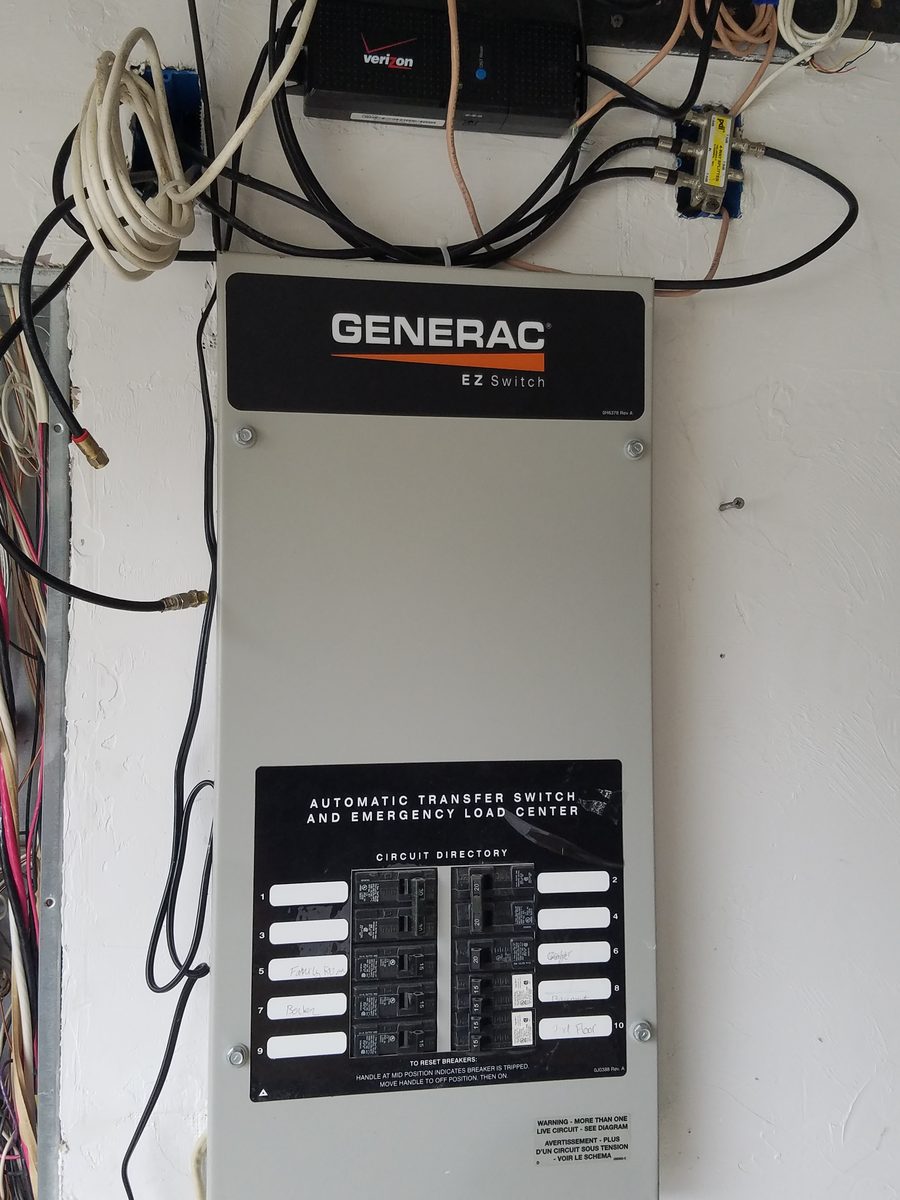
- A licensed electrician installs the automatic transfer switch, connects it to your panel, runs the wiring to the generator, handles grounding, and pulls the electrical permit. That is the part Bergeron Electrical Contracting does.
If you are getting a standby unit from a dealer, we can handle the electrical connection. If a portable generator fits your needs better, see our generator hookup and transfer switch service.
What size whole house generator do I need?
The right size comes from what you want to keep running during an outage, not from your home’s square footage. A smaller home with electric heat and a well pump can need a bigger generator than a larger home with gas heat and city water.
Essential circuits (around 10 to 12 kW): heat, refrigerator and freezer, well pump, sump pump, some lights and outlets. The house stays livable and protected, but central air, an electric range, and an electric dryer will not all run at once.
Whole home (around 18 to 24 kW): runs nearly everything at the same time, including central air and electric appliances. It suits larger homes, homes with medical equipment, and anyone who wants the outage to go unnoticed.
Motors in well pumps, sump pumps, and air conditioners draw several times their running power for a moment when they start, so a proper load calculation accounts for starting load, not just running load. Oversizing wastes money on the unit and fuel. Undersizing leaves you without heat or water when it matters.
Should I get a standby or a portable generator?
They solve different problems.
A standby generator is installed permanently outside, runs on natural gas or propane, and starts on its own within seconds of an outage, even when you are away. It costs more up front and needs yearly maintenance.
A portable generator costs far less. You set it up, fuel it, and start it yourself, and it plugs into an inlet box connected to your panel through a transfer switch or interlock. It has to run outdoors, well away from windows and doors, because of carbon monoxide. Our portable generator hookup runs $1,150 to $1,650.
Standby makes the most sense if you lose power often, rely on a well or sump pump, have medical equipment, or travel. A portable is often enough for occasional, short outages when you are home to run it.
What electrical work does a standby generator involve?
More than most homeowners expect, which is why it is licensed electrician’s work.
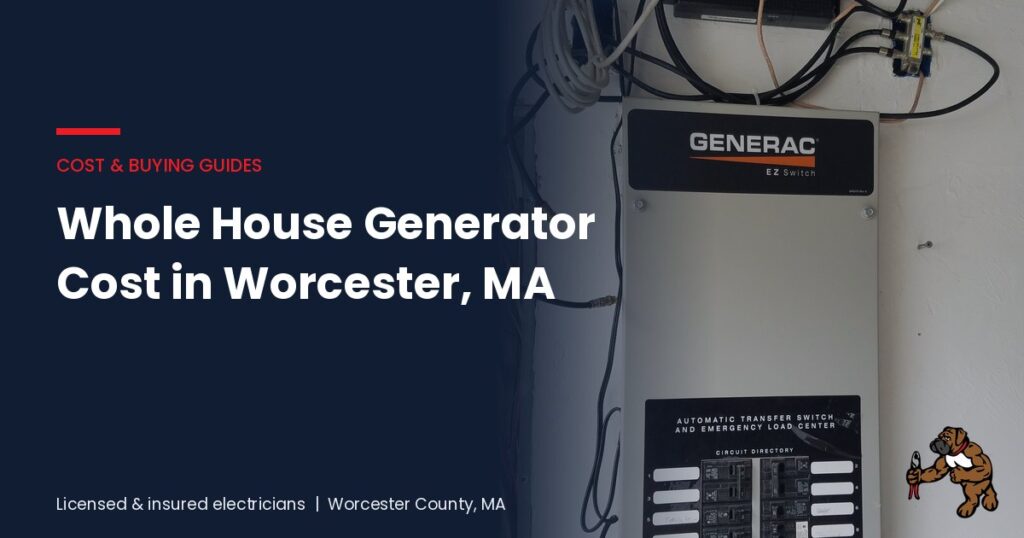
- Automatic transfer switch. Mounted near your main panel, it senses when utility power drops, signals the generator to start, and switches your circuits over. When power returns, it switches back. It also keeps generator power from feeding back onto utility lines, which protects line crews.
- Panel connection. We connect the transfer switch to your panel and either the essential circuits you choose or the whole house. Older or full panels sometimes need a panel upgrade first.
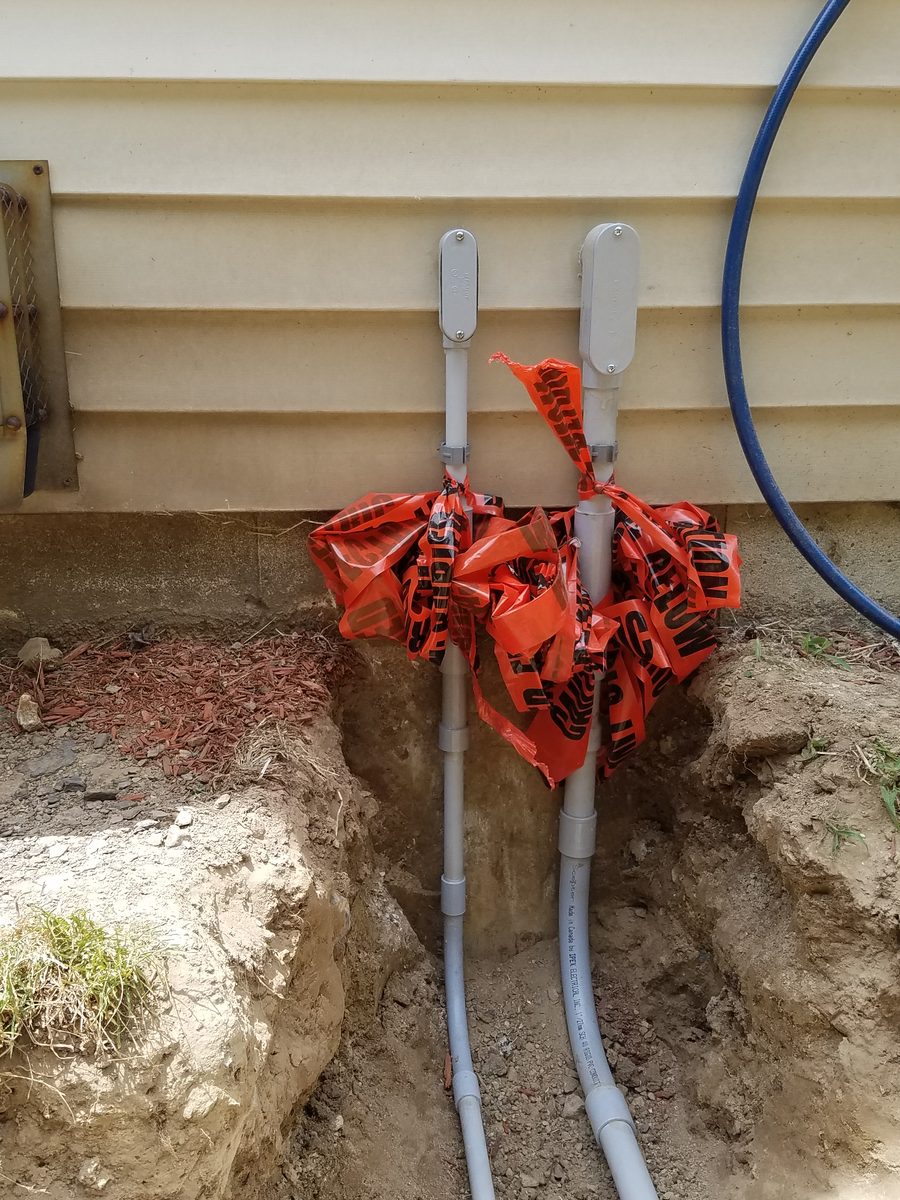
- Outdoor wiring. Wiring runs in conduit from the transfer switch to the generator, above ground or buried.
- Grounding and bonding to code.
- Permit and inspection. The electrical permit is usually about $150 to $250, set by your town. Gas work has its own permit and inspection.
Placement matters too. Generator manufacturers specify minimum clearances from windows, doors, and air intakes, and your town may have setback rules. If any digging is involved, Massachusetts law requires a call to Dig Safe at 811 at least 72 hours before work starts, not counting weekends and holidays. Our electrical permits guide explains the permit process.
How long does a standby generator installation take?
Most installs take one to three days of work across the trades: setting the pad and unit, the gas connection, and the electrical work, followed by testing and inspections. A new gas line from the street, a panel upgrade, or winter weather can stretch the schedule. The generator goes into service once the electrical and gas inspections pass.
Is a whole house generator worth it in Massachusetts?
It depends less on how often the power goes out and more on what an outage costs you. Massachusetts customers average fewer interruptions than much of the country, according to the U.S. Energy Information Administration. But a single winter ice storm can leave parts of Worcester County dark for a day or more, and that is when the damage happens.
A standby generator is usually worth it for homes with a well (no power means no water), a sump pump, medical equipment, a home office, or older or very young family members, and for homes that sit empty while you travel. If you have city water, no sump pump, and rare, short outages, a portable generator hookup is often the smarter spend.
What fuel do standby generators use?
Almost all home standby generators run on natural gas or propane, piped straight to the unit so you never refuel by hand. If you already have natural gas service, tying into it is usually simplest, and the supply continues through an outage. Homes without gas use a propane tank on the property, which needs periodic refills and should be sized for how long you want to run. Your gas fitter sizes the line or tank for the generator’s demand.
Get sized right, priced honestly
The team at Bergeron Electrical Contracting will look at your panel, run the load calculation, and tell you what size makes sense and what the electrical side involves, with no upselling. Call (508)-735-7245 or request a free estimate.
Bergeron Electrical Contracting. MA Master Electrician License #21807-A. Serving Worcester and Worcester County since 2006.
Frequently Asked Questions
How much does a whole house generator cost in Worcester, MA?
About $8,000 to $19,000 installed, with most complete jobs around $12,000 to $15,000. A new gas line adds about $3,500 to $5,500 if needed. These are market ranges across all trades. Bergeron Electrical Contracting does the electrical side, not the generator unit.
What size generator do I need for a 2,000 square foot house?
Square footage does not decide it. A 2,000 square foot home with gas heat and city water may only need about 10 kW for essentials, while the same home with electric heat and a well pump could need 20 kW or more. A load calculation gives the real answer.
Do you install the generator itself?
No. We do not sell or set generator units. We install the transfer switch, connect it to your panel, run the wiring, and handle the electrical permit and inspection. For portable generators, our hookup runs $1,150 to $1,650.
Do I need a permit for a whole house generator?
Yes. In Massachusetts, the electrical connection needs an electrical permit and inspection, and the gas connection needs its own permit and inspection. The generator cannot be put into service until both pass.
Are there rebates or tax credits for standby generators?
Generally no. Standby generators burn fuel, so they do not qualify for Mass Save energy-efficiency rebates or current federal energy tax credits. Ask your insurer whether it offers any discount for backup power.
Do I need to run my standby generator regularly?
Most standby generators run a short automatic exercise cycle every week or two to keep the engine and battery ready. Annual maintenance from your generator dealer keeps it reliable and protects the warranty.